Pentimento
An algorithm that revises.
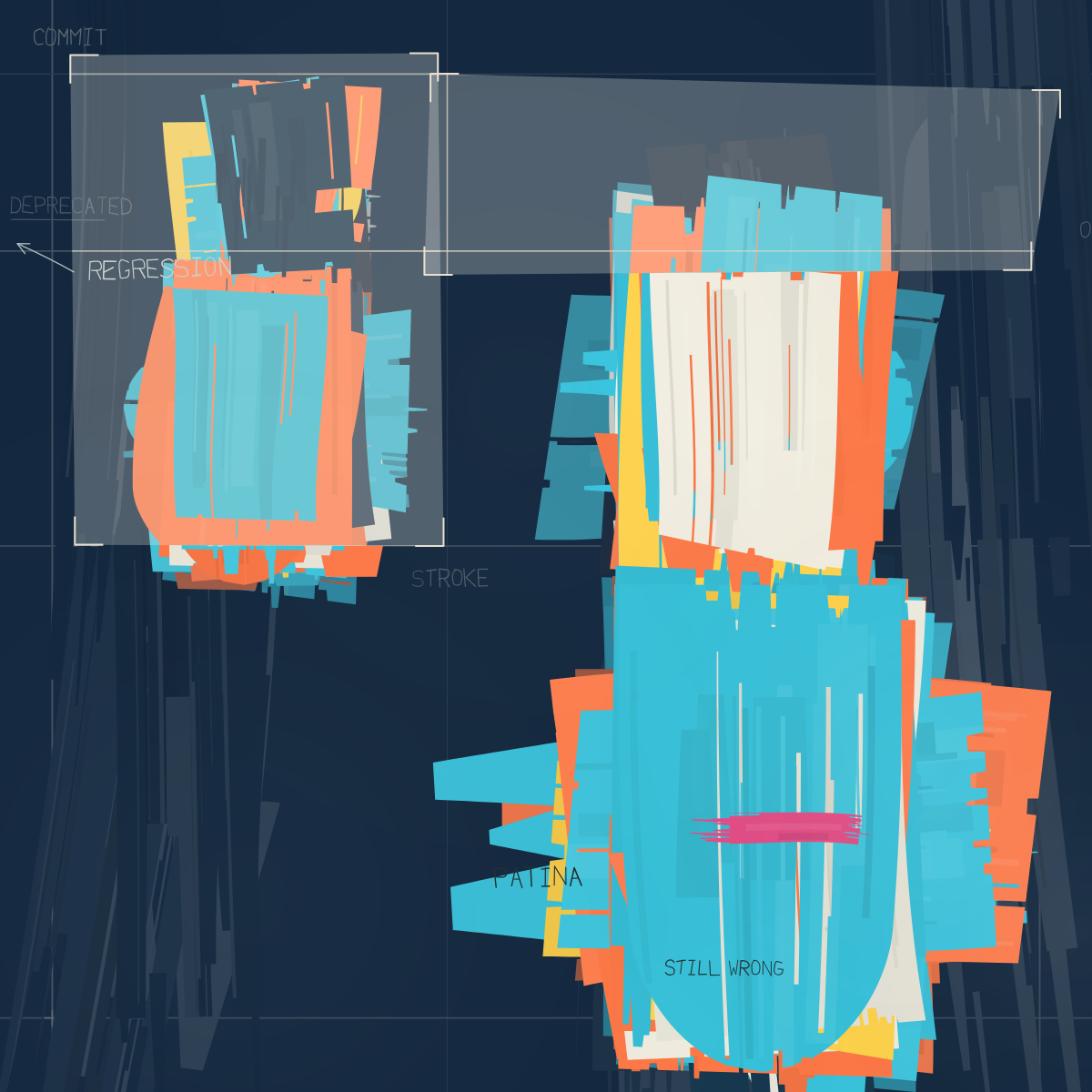
Pentimento is an algorithm that revises. Every output is ruled on a Fibonacci construction grid, painted in flat confident strokes, then reconsidered: marks are scraped back, blocked out, and overpainted, and the earlier decisions stay visible beneath the final surface. Then the tape: the grid becomes a mask with the properties of a real one, and the finals alternate between taped blocks and runs of loose paint, so a block taped early wears the paint that came after it and a block taped late stays crisp. Hand-lettered working notes in the artist's own vocabulary are buried under and written over the paint. Some pieces cut windows through the finished painting; some keep a block taped shut so only the plan shows; rarer variants survey the grid, write the token hash on the plan, or never paint at all. One in thirteen carries the artist's number. The still frame is the work; on first view it rebuilds itself once, in its true order, then settles.
the layered build
On first view a piece performs its own construction once, about 13 to 15 seconds: the name, the grid, the tonal wash stroke by stroke, the pencil notes one at a time, three paint movements (the first marks, the reconsideration where marks are scraped and blocked, then the finals as tape and paint in turn: tape on, a block painted over the tape, the lift, loose paint across the sheet, tape again) with working notes jotted between them, the notes on top, then the settled frame. On an Excavated piece the windows are cut as the confident marks arrive, so you watch the painting withhold itself and keep its buried layer visible. The reveal is a deterministic replay of the true construction order, not a simulation. Every subsequent look replays it identically, the same choices in the same order, forever.
artist statement
I made this because I am not done either, and I have spent the last few years wrestling with whether I should be.
My days are split between two pulls. There is the work I do for a living, the agents I am building, the things I am driven to make because I can. There is also a life happening in front of me. My daughters at the age where everything is a question and every question is the start of a conversation, my time with them shrinking the way time does. I love both. I cannot have all of both. Most of what I think about, lately, is what it costs to keep choosing the first one when the second one is right there.
So I built the conflict into the machine. A pentimento is the mark a painter changed but could not fully hide, the ghost of an earlier choice showing through the confident one on top. Pentimento does not paint. It revises. Each piece lays down a composition, works it and works against it, scrapes and blocks out and paints over parts of it, and refuses to clean up after itself. The earlier marks stay visible under the final strokes. The correction is the subject. The flaw, kept on purpose, is the beauty. It looks computer-made. That is the point, not an apology.
The blocking out is tape. The painting is laid, then taped off block by block and painted again, in an order the hash decides, so a block taped early wears the paint that came after it and a block taped late stays crisp. Each sheet keeps its own order. The tape is a real mask, with a width, a drift, torn ends, and the paint that ran past it and stayed. Its lift is the reconsideration the title names. A block the paint crossed is sometimes taped again and knifed back in its own color, only where the paint crossed it. The untaped painting survives only where the sheet gives the tape nothing: an abandoned piece, a plan sheet, a gesture.
What you are holding is one finished frame, and it knows how it got here. Open it and it rebuilds itself once, the grid, the notes, the tape laid and lifted, the marks scraped back and painted over, then settles. It is deterministic, so it will retrace the same choices in the same order every time you look, forever. The process is not still running. It is kept.
The piece is ruled on a Fibonacci grid and carries hand-lettered notes buried under and written over the paint, mostly in my own words, the things I actually mutter at the easel and the keyboard. Every painted piece lays exactly a Fibonacci number of strokes, tape included, and a count written on the face is the count laid. Some pieces cut windows to show the drawing underneath, and some blocks stay taped shut so only the plan shows. A painted First Try still hides a single regret. Thirteen runs through all of it. The scraped-off places are my favorite part of the work, so I raised their share myself, and the record says so.
I built it in long working sessions with an AI, the way a painter works with a studio. A work about visible process should not bury its largest process under the paint. The engine I froze before the tape, the painting with no mask, is this work's underpainting in method, and it stays viewable beside this one.
The hardest part of any work is knowing when to stop. To leave the correction showing and call it done. That is the lesson I keep trying to learn, that the striving is the beauty, that the unfinished is not a failure, that what is in front of me is enough even while I keep reaching.
This piece is for my daughters, my wife, and for me. Part apology for the hours I spent making it, hours of the shrinking kind, part gift, a thing that says I see you, I am trying, I want you to strive and I want you to stay.
The frame is finished. The work is not. Neither am I.
michael (michael.art)
prints
Every piece renders at any size from its hash: the same grid, the same strokes, the same buried notes, identical on a phone screen and on a four foot wall. Nothing is upscaled. Ask for a size and the painting is repainted at that size.
Click the live piece first so it hears the keyboard, then press a key; a PNG downloads. Works on the piece at the top of this page and on the full screen generator. No keyboard needed either way: the live piece carries a save control at your chosen size, and a traits readout for the piece on screen. The largest sizes take a moment and want a desktop browser.
gallery
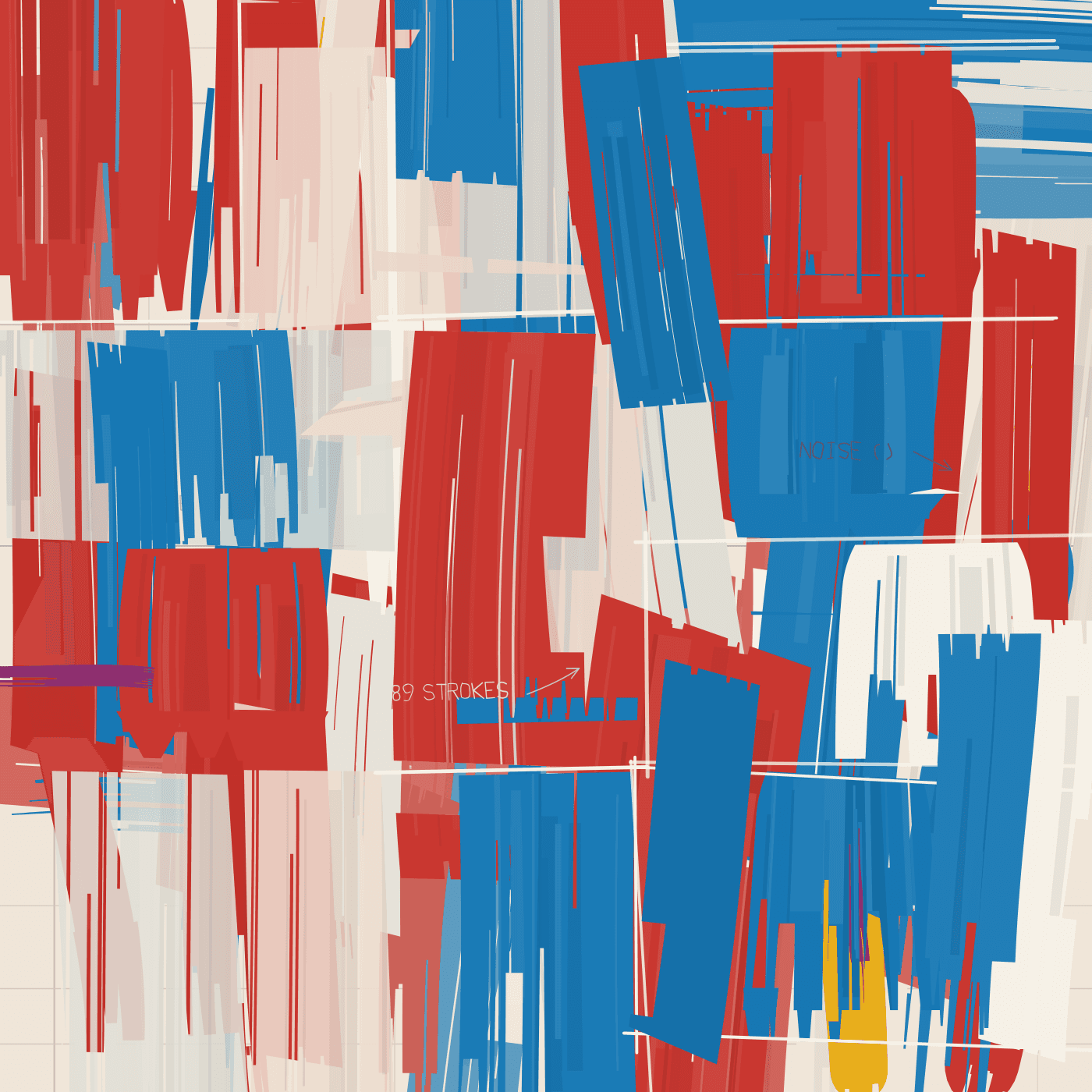
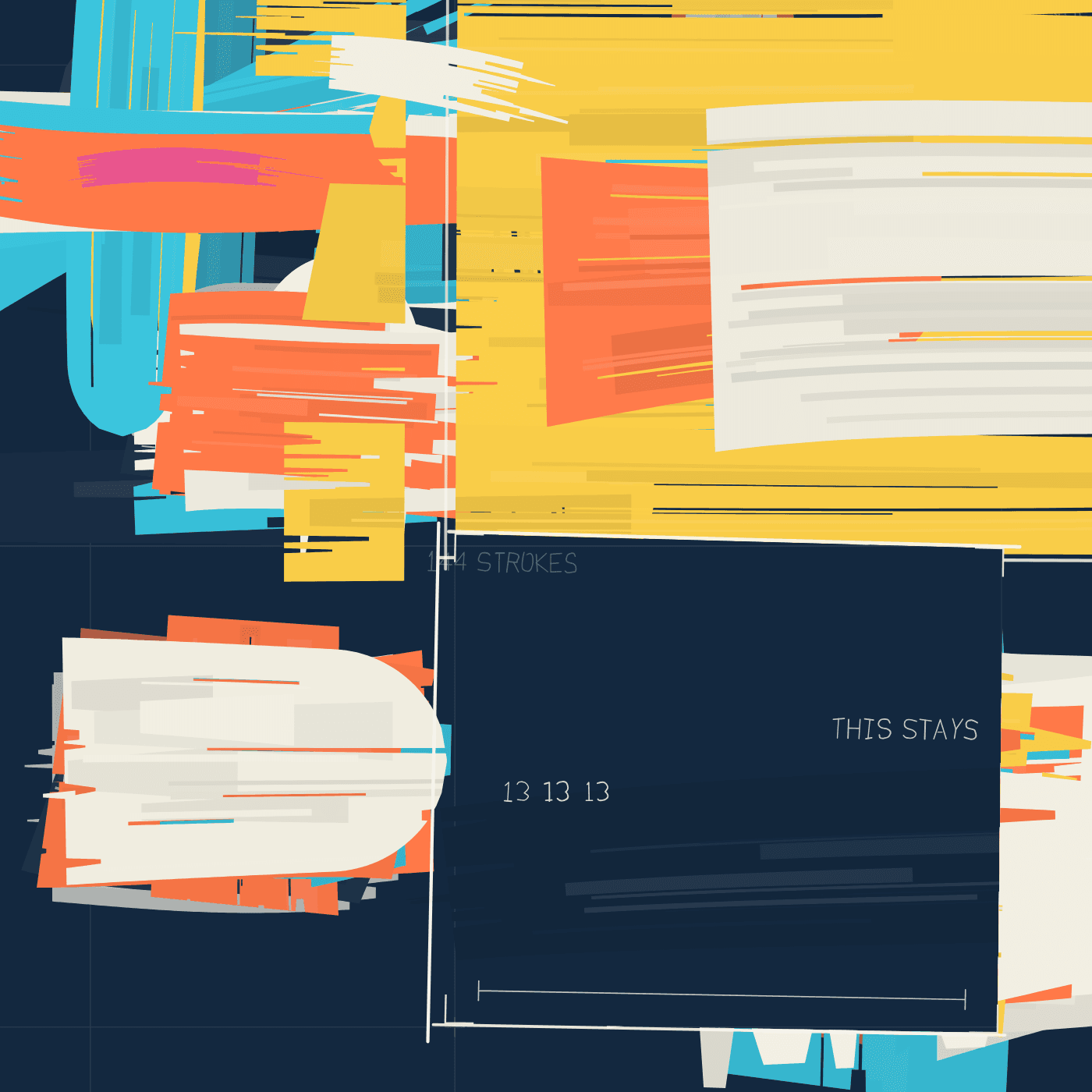
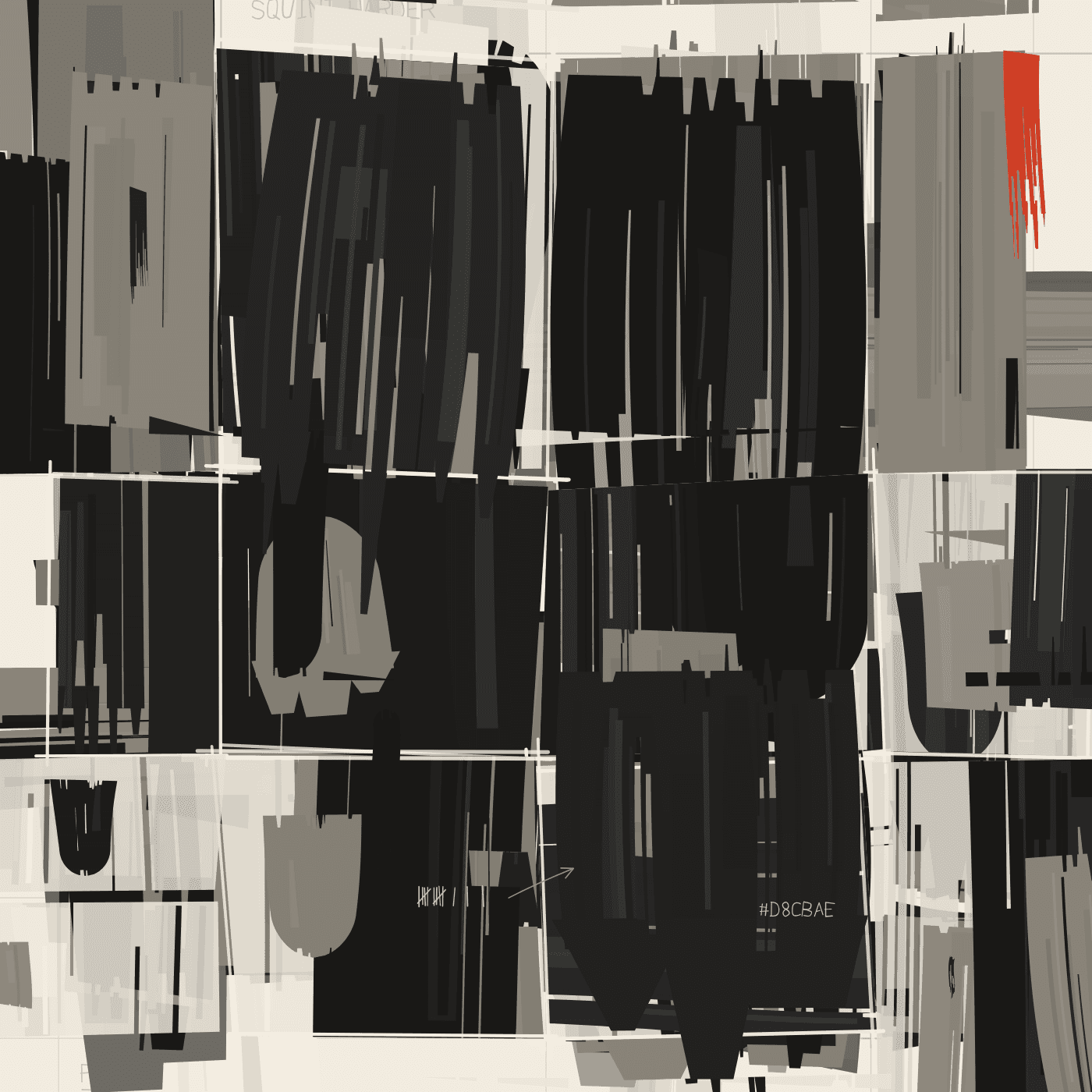
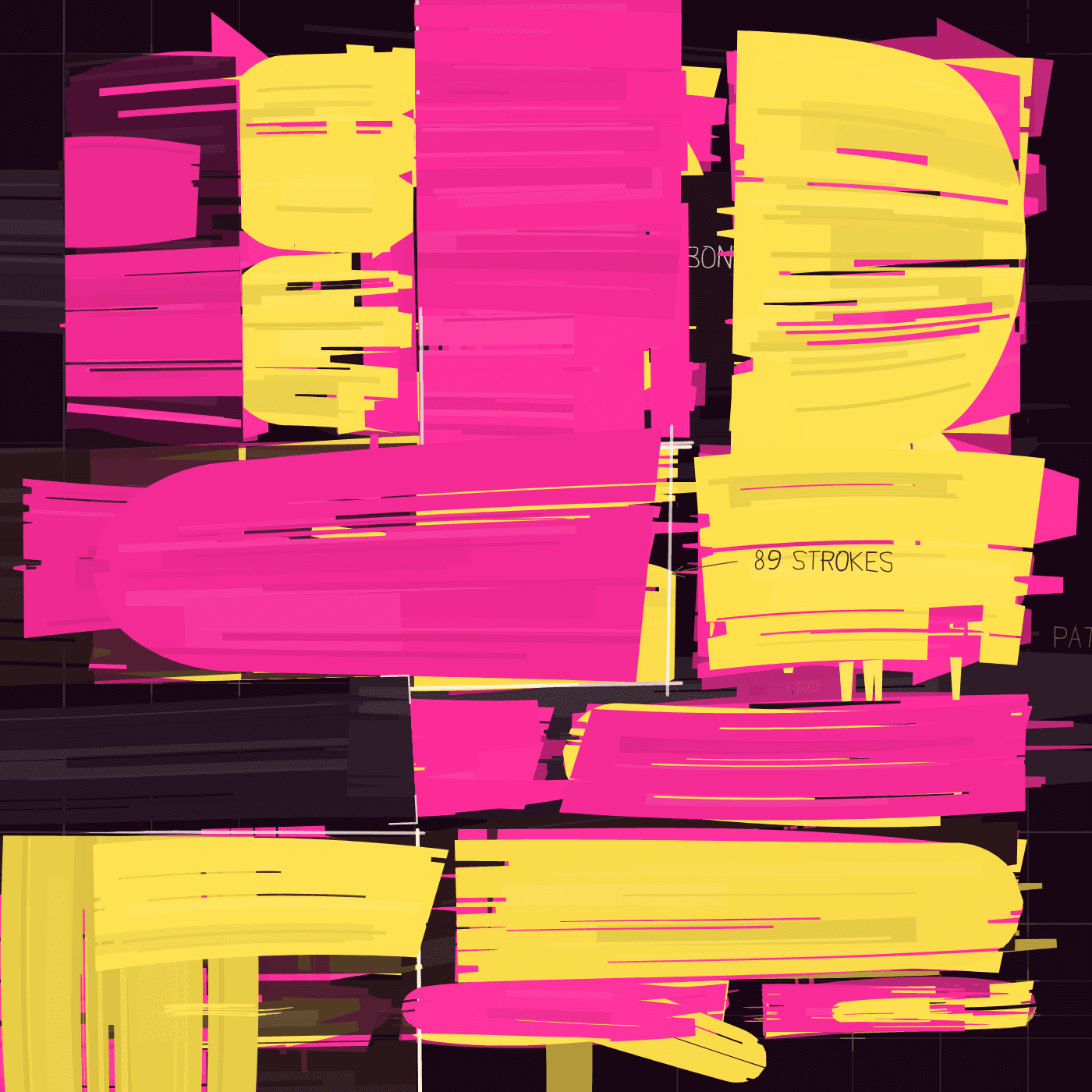
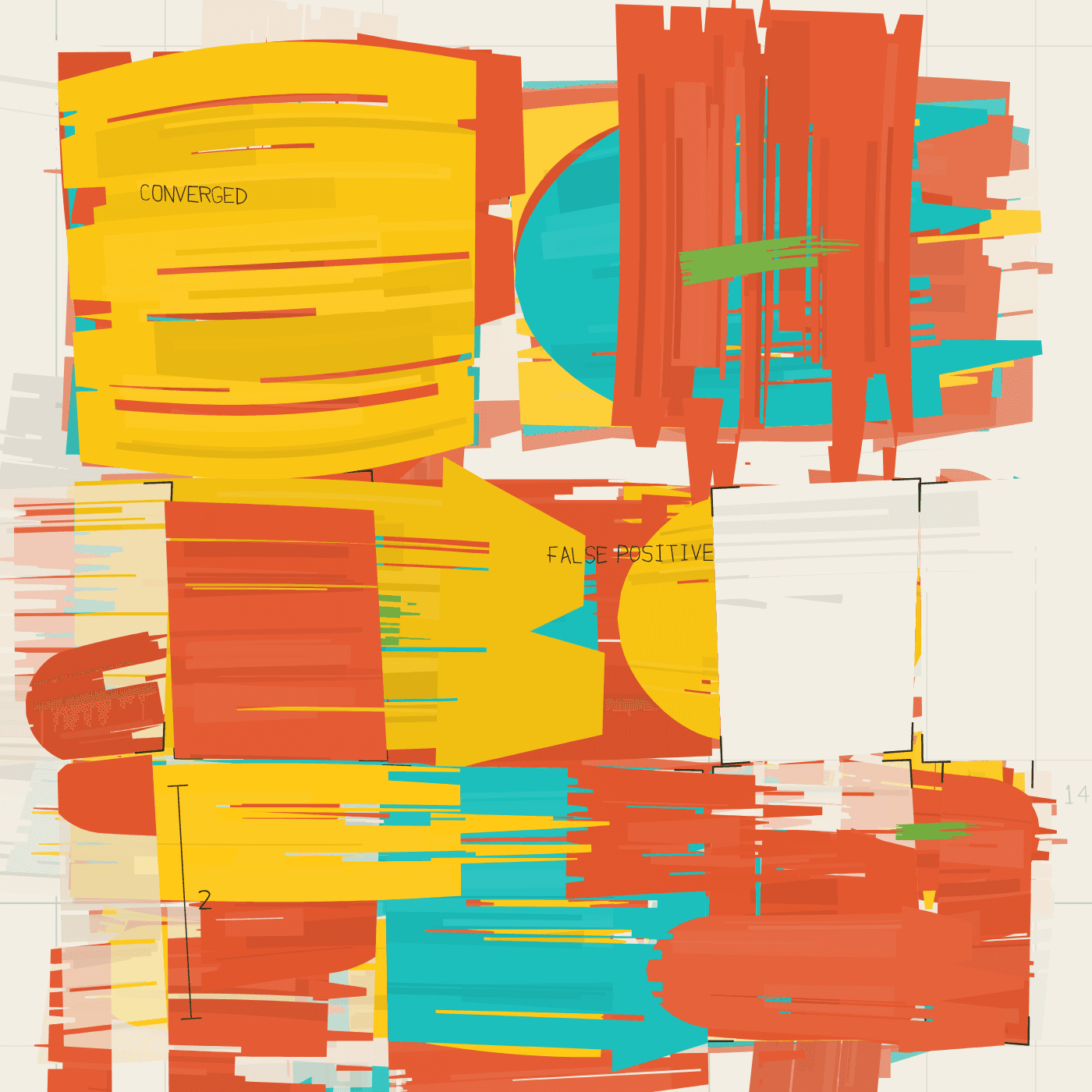
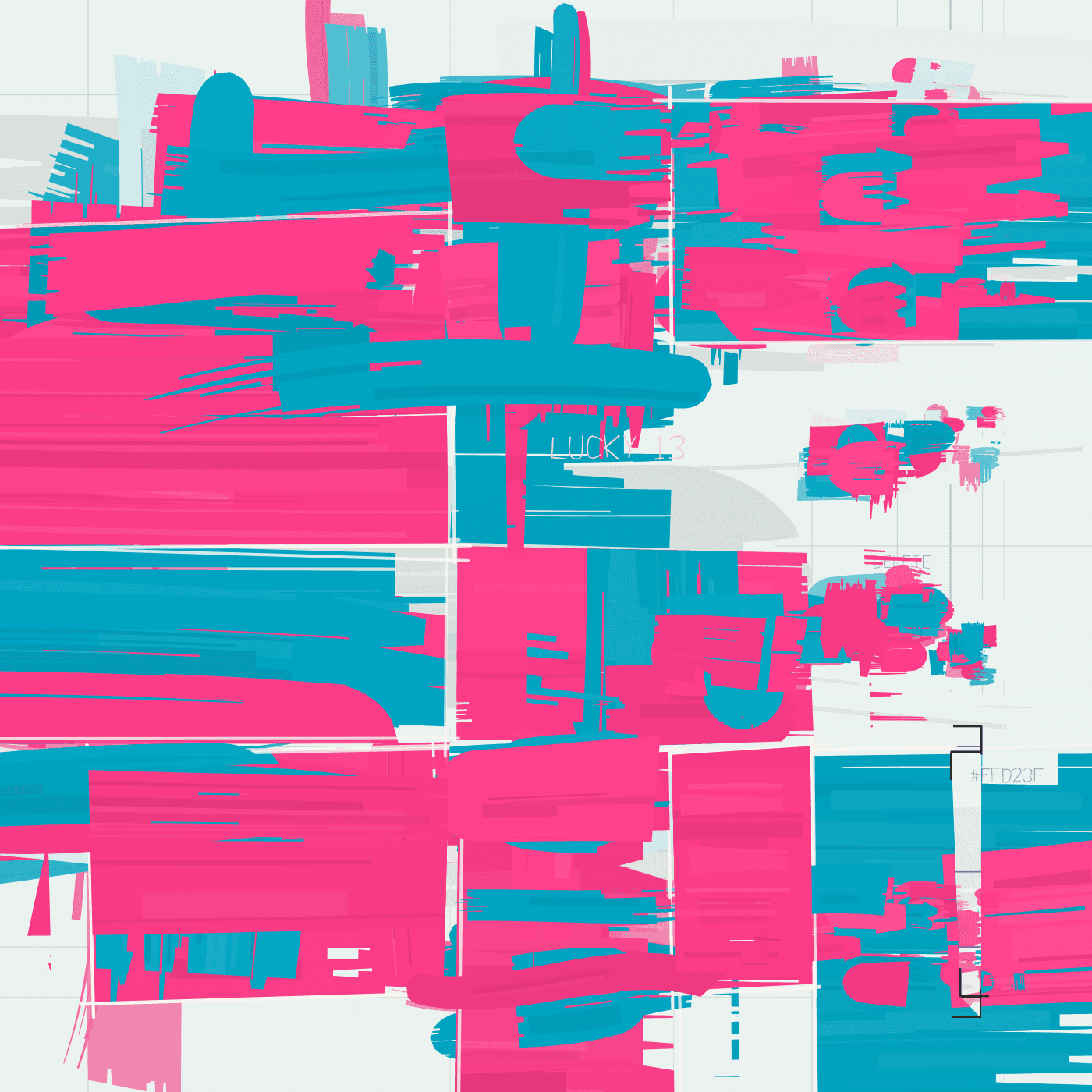
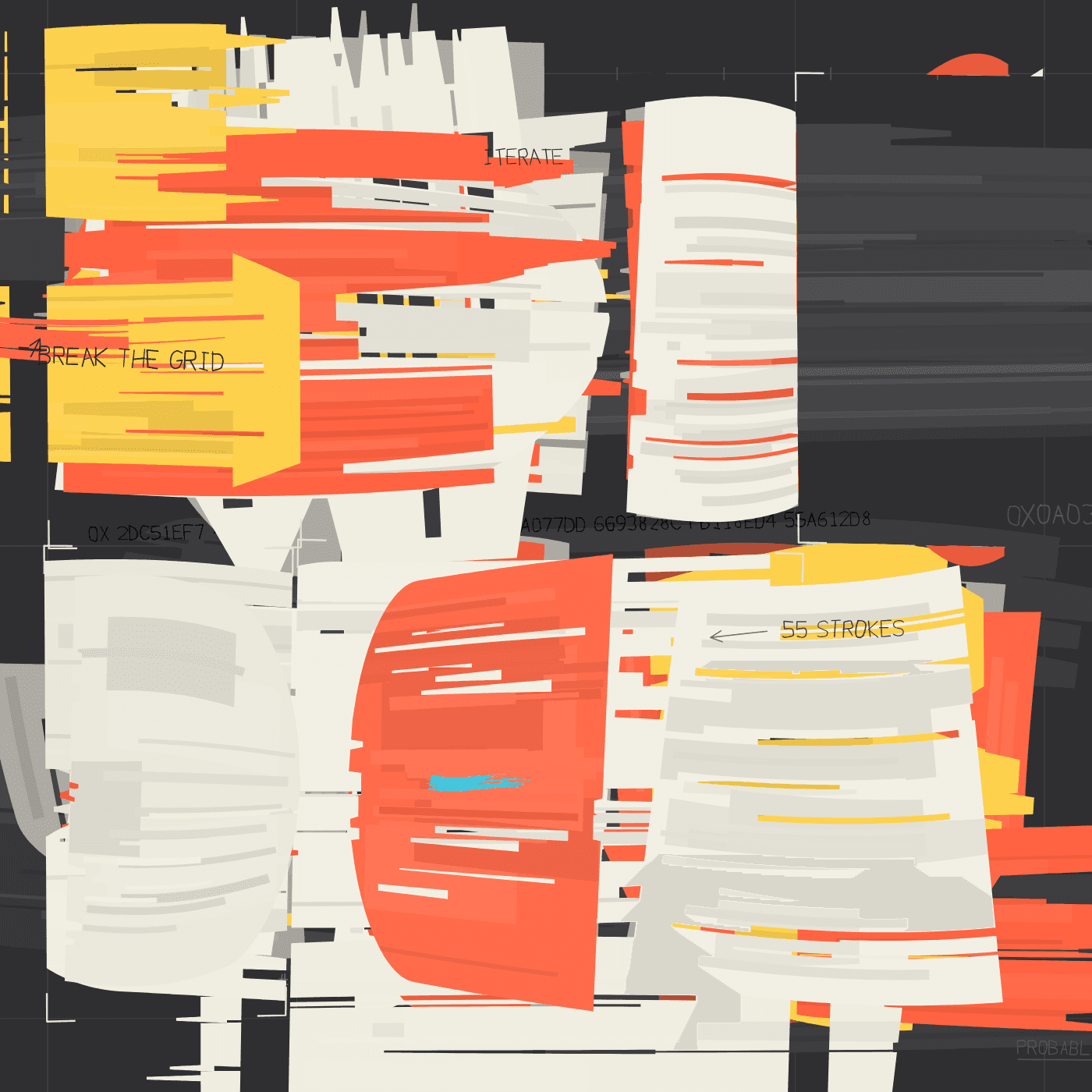
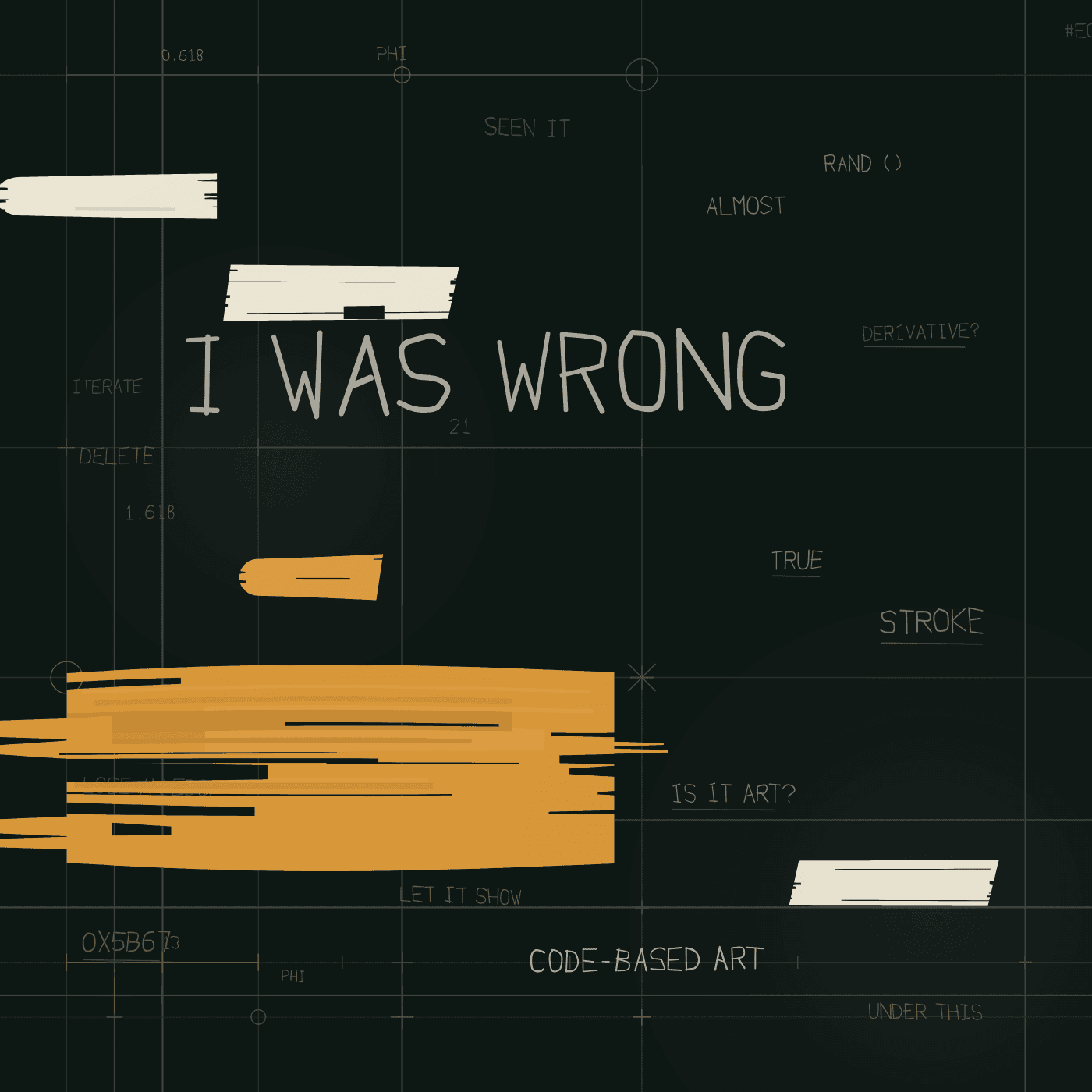
Twelve pieces from the engine as it stands, one for each way the tape can behave. Every one is a real output: the hash decides the palette, the count, where the tape goes and when.
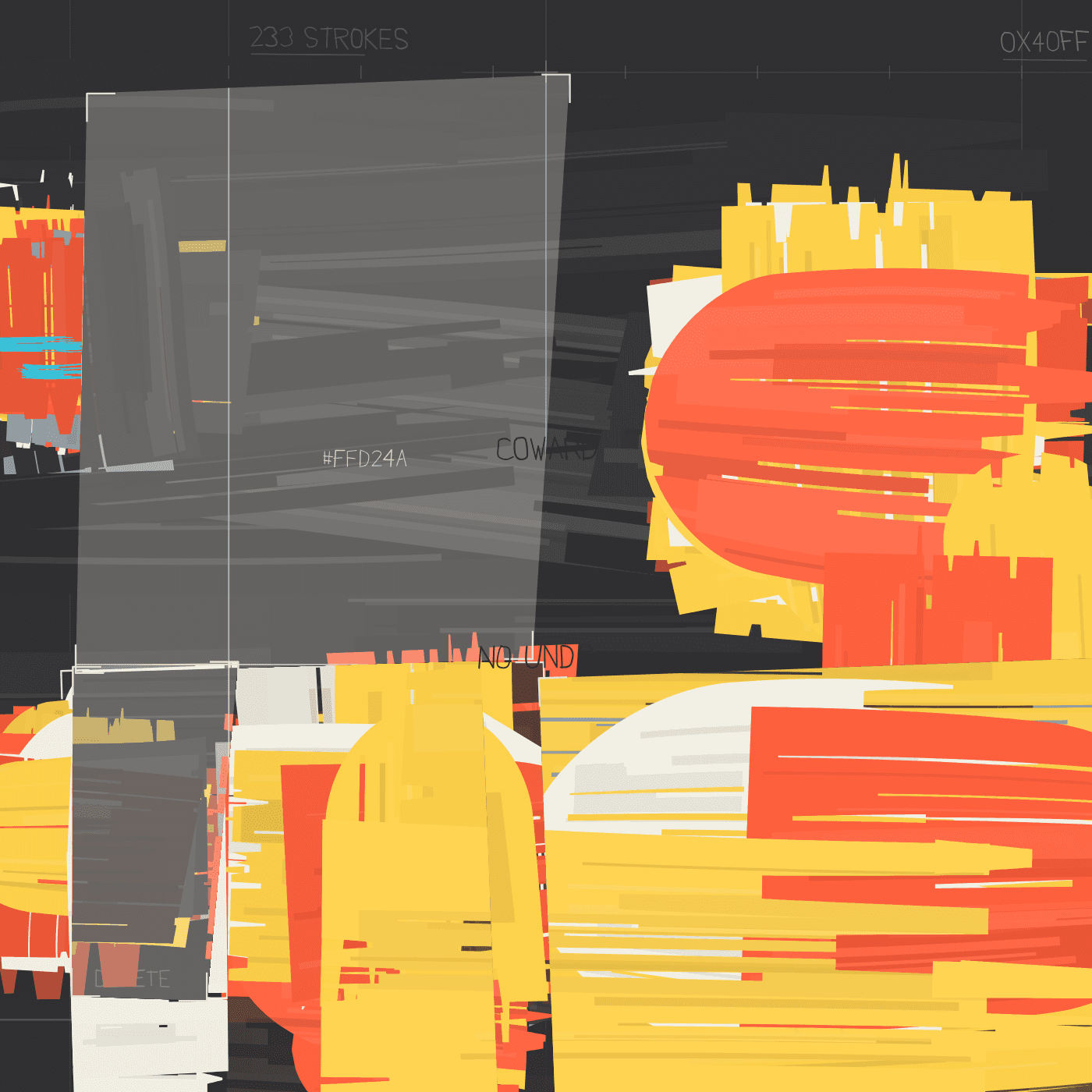
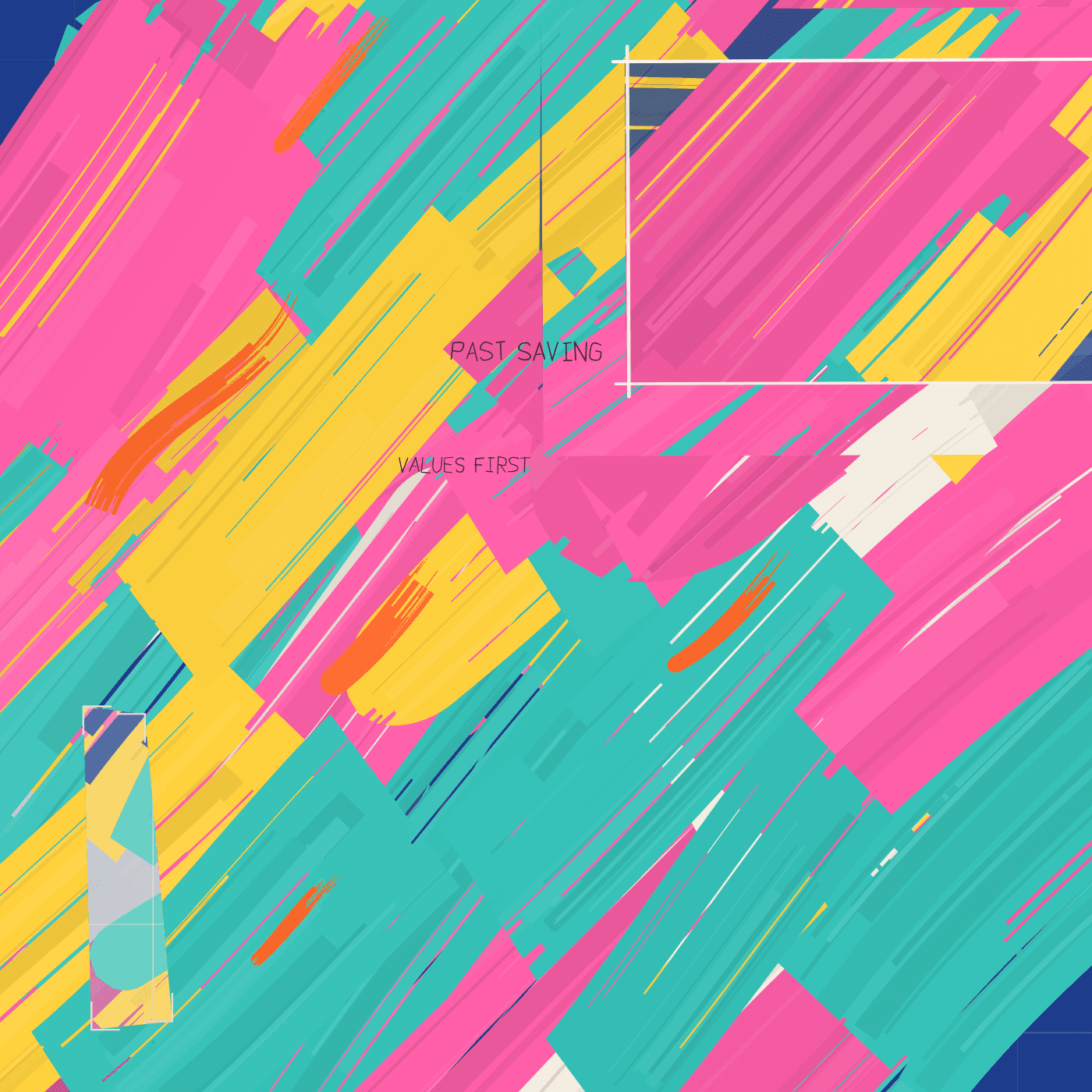
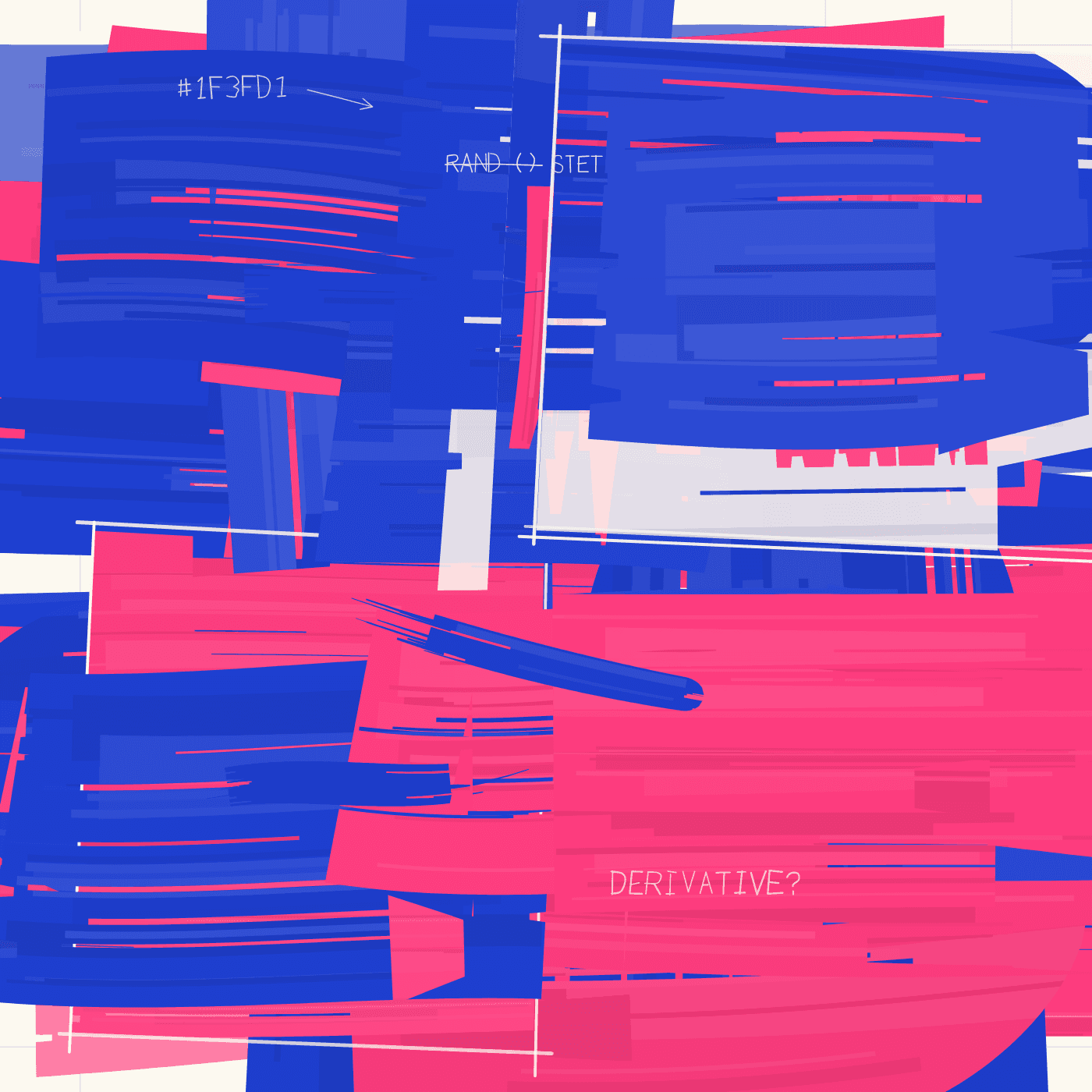
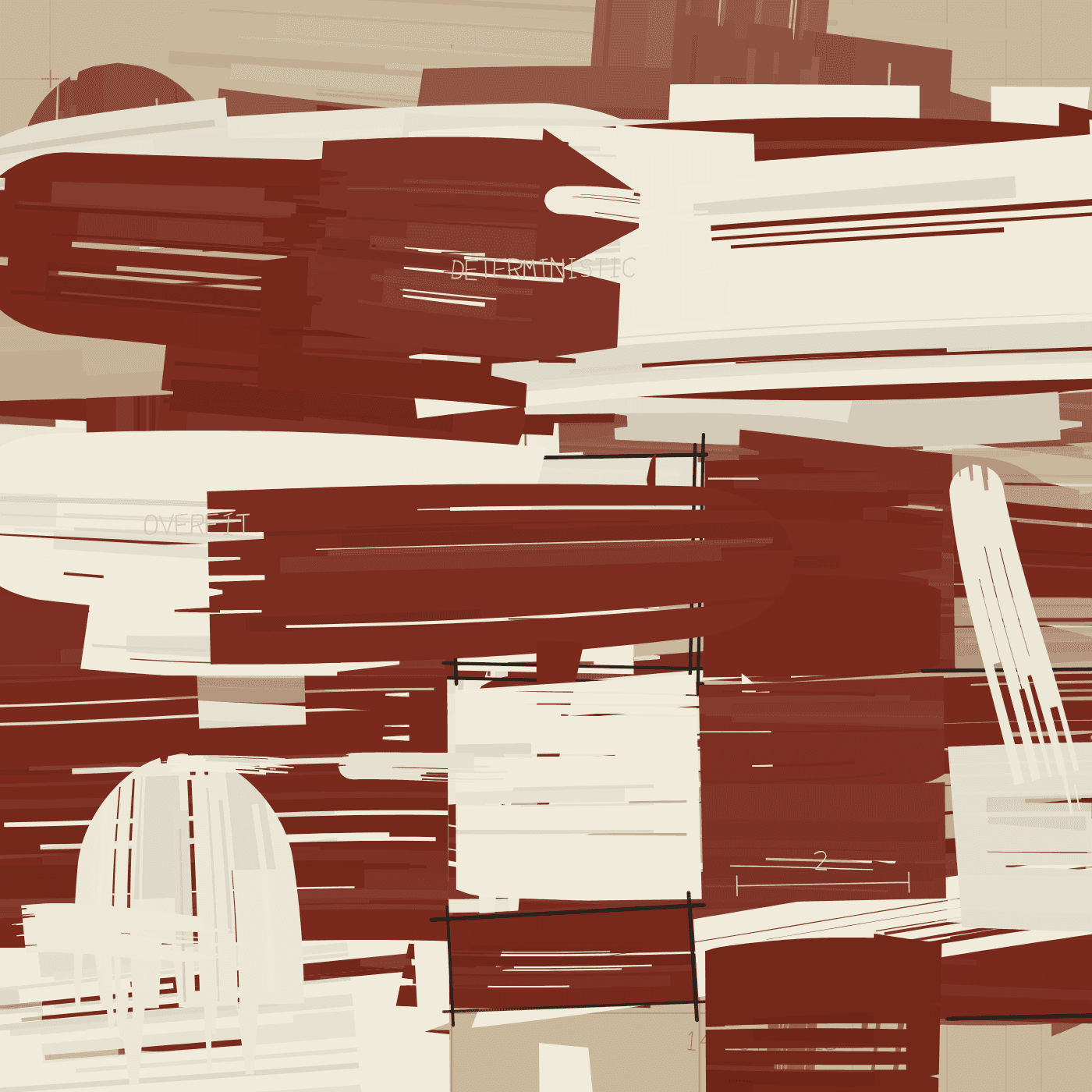
traits and rarity
Every painted piece lays exactly a Fibonacci number of strokes: 1, 2, 3, 5, 8, 13, 21, 34, 55, 89, 144, 233, 377, or 610, and the count on the face of the sheet is the count that was laid. The tape takes its share of that count; nothing is added on top of it.
| Trait | Values | Notes |
|---|---|---|
| Fate | Worked, First Try, Restless, Abandoned | Abandoned pieces (~7%) are never taped; the old painting, spent and regretted |
| Palette | 13 named palettes | each with per-color dominance so one or two colors lead; five dark grounds |
| Placement | Grid, Bands, Packed, Stack, Field | how the underpainting derives from the construction grid |
| Grain | Warp, Weft, Bias | one direction per piece; the taped pulls follow it |
| Grid | Ruled, Surveyed (~2%) | Surveyed writes tiny position data on the construction sheet |
| Structure | Coarse, Medium, Fine | grid fineness |
| Density | Gesture, Sparse, Balanced, Dense, Saturated, Teeming, Swarm, Sheet, Cartoon | from the stroke count; Sheet (~4%) is the plan with a handful of long lanes; Cartoon (~1%) never paints |
| Coverage | Exposed, Light, Worked, Heavy, Buried | the measured painted fraction |
| Excavation | Intact, Excavated (~29%) | a window cut through the finished paint exposing that piece's own buried layer; never on a piece with a reserve |
| Signature | Buried (~10% of eligible), None | the token hash written in pencil on the plan; only on plan sheets, torn pieces, and pieces with a reserve |
| Scale | Intimate, Standard, Monumental, Colossal | fewer strokes force larger strokes |
| Surface | Lit, Flat | faint light pools, or none (never on a taped piece) |
| Tape | Sealed (~24%), Strict (~38%), Lapsed (~24%), Torn (~15%), None | the discipline: every block taped; blocks five, eight and thirteen left loose; one contiguous lapse of about a third; one to three taped islands. None only where the sheet gives the tape nothing (~14%) |
| Border | Keyline (~42%), Crop (~35%), None (~23%) | a drafted pencil line on the tape edge, or the printer's crop brackets; a rule, not a dial: lapsed and torn pieces nearly always carry a line, dense sealed pieces may go without |
| Inks | Two (~36%), Three (~32%), Full (~29%), Two and a note (~3%) | the taped piece held to its two or three dominant inks; on the paper-and-ink palettes, one small stroke of the accent |
| Reserves | None (~76%), One (~13%), Two (~4%), Proof (~7%) | a block taped shut for the whole painting, showing only the plan; a Proof is the largest block, the reserve as the subject |
| Event | None (~57%), Dims (~18%), Strike (~12%), Caption (~7%), Cross (~6%) | the sheet's one drafting event: a measure along a tape edge, a plan word struck through with STET, the refusal's caption, a registration cross; reported only when it was actually drawn |
The tape, in order
Every taped piece alternates between taped blocks and runs of loose paint, in an order the hash decides. A block taped early wears the paint that came after it; a block taped late stays crisp; every piece ends on a block. A crossed block is sometimes taped again and knifed back in its own color, only where paint actually crossed it. The animation replays the true order.
Note events (not traits, but hunted)
- The thirteen (~1 in 13): exactly one thirteen-note written over the paint (13, THIRTEEN, XIII, 0X0D, the tally marks %%|||, and kin).
- The outburst (~1 in 55): one of the realest words at the easel, written over the paint. Four of them exist, one for each corner of the work: surrender before the stroke, the accident as it lands, awe when it surprises you, relief when it is finally done. About seven pieces in the edition carry one.
- The refusal: one stroke that crosses a tape edge, painted last and unclipped, named in pencil only when the sheet's event is the caption.
the lexicon
The most personal element of the work. Every piece hand-letters notes onto its canvas, dealt from the artist's own working vocabulary: the things he actually mutters at the easel and the keyboard. Notes are written in pencil under the paint (and buried by it), jotted between the paint movements (and painted over), and written on top at the end. No word repeats on one canvas. Three languages, one person.
Revision, the act
SCRAPE THISBURY ITSTART AGAINLET IT SHOWWAS HERE FIRSTUNDER THISI WAS WRONGNOT YETTHIS STAYS
The internalized critic
STILL WRONGTOO SAFENOT ITALMOSTPROBABLY NOTHINGDOES IT WORK?IS IT ART?SO WHAT?SEEN ITTOO CLEVERDERIVATIVE?FALSE POSITIVESIGNAL/NOISE?MAYBEWHICH VERSION?WHOSE VOICE?SQUINT HARDER
The engineer's regret
OVERFITPAST SAVINGWHILE(TRUE)
The maker's moves
DELETELOSE AN EDGEVALUES FIRSTNEGATIVE SPACEZOOM OUTNO UNDO
The rare yes
GOOD ENOUGHCONVERGEDDONE(ISH)SHIP ITPATINA
Two words the devices own: BREAK THE GRID is written only by the refusal, the stroke that crosses a tape edge; STET only by the strike, beside a word crossed out. The standup's vocabulary left the deck in September 2026, on the board's rule that a word that could be a commit message does not go on the painting.
The dark notes: SAFE IS DEATH, BORING, COWARD, QUIT, GARBAGE, HATE IT
The artist's own shorthand: GM, VIBE, GRAIL
A second register speaks the work's code voice (FLOW FIELD, SEED, DETERMINISTIC, ENTROPY, EMERGENCE, and kin); the market's words left it too. The thirteen register and the outburst are rare events, listed under traits.
the process
A work about visible revision should keep its own revision history visible. This is how Pentimento was actually made, and the records behind it are public.
The collaboration
Pentimento was built by a human artist directing an AI in long working sessions, the way a painter works with a studio. The artist decides: palettes in and out, rarity rates, trait names, the vocabulary, the animation choreography, what ships. The studio implements and verifies: every change runs behind a fixed battery before it lands. Every decision is written into a dated decision ledger, including the ones that reversed earlier decisions, which are kept in place with banners rather than deleted. The documentation practice is the thesis practiced: scraped decisions left showing.
The AI collaboration is not buried in a footnote because the work's own principle forbids it: a work about visible process should not bury its largest process under the paint.
The instruments
- The decision ledger. Every consequential call, dated, with the reasoning and the verification results attached. Superseded decisions stay visible.
- The curatorial board. A disclosed fiction: AI critic personas with distinct lenses that review rendered work at milestones and return structured findings. Advisory, not sovereign: its strongest findings shipped; its weakest were declined by the artist, on the record. See the board section for the seats, the reviews, and what changed because of them.
- The verification battery. No change merges without passing: same-hash renders byte-identical; the animation hooks add zero randomness (verified against the static render); traits identical across render sizes (proven 300px to 14400px); the on-chain build pixel-identical to source; the features script's traits match the browser's; glyph coverage for every word in the vocabulary; rarity rates measured against nominal by headless scans of hundreds of renders.
Highlights of the revision history
- The engine's randomness was hardened early: canvas pixel-reading was removed entirely (a cross-browser determinism hazard) in favor of a JS-side surface memory. It also made rendering three times faster.
- A crypto-slang note register shipped for weeks, then was retired after the board argued it timestamped the work to a market moment. The market's vocabulary left the deck for good in September 2026, along with the engineer's standup register, on the rule that a word which could be a commit message does not belong on a painting. Four words came back at the artist's insistence, at base rate and out of the boosted pool: three he actually says, and one that describes the object. The painter's voice led afterward, and the whole vocabulary was rewritten in the artist's own words.
- An on-top "ledger" stamp of the token hash was nearly cut by the board as provenance cosplay; the artist kept the idea and buried it instead: the hash is now written in pencil in the under-layer and painted over, a pentimento of identity. The trait is called Signature.
- Excavation windows were briefly 39% of the edition; the board called it a house style, the artist set a 15% floor, and the windows read as events again.
- Every painted piece is guaranteed at least one visible act of revision; outputs that shipped "empty of the thesis" were treated as defects and eliminated.
- The build animation went through three generations in two days and settled as the layered reveal: the true construction order, replayed deterministically, settling byte-exact on the still frame. The still frame remains the work.
- After the freeze, the artist forked his own engine. Five structural probes were rejected; an accident, thirteen lanes leaking onto an unpainted plan sheet, was kept; his own brief produced the tape, a physical mask with width, drift, torn ends and residue, laid block by block over the frozen painting.
- A board on the artist's eighteen favorite outputs found the drafted keyline picked at nearly twice its rate and no untaped piece among them. He then overrode the boards on the record, in his own words: more scraped-off pieces, more reserves, more proofs, because those are the parts he loves.
- The full board, eleven seats, reviewed the fork twice. The first review held it at a mean of 6.5: keep the rule, cut the costume, write down what this is. The cut list was built: the untaped coin removed, the market words out of the deck, one drafting event per sheet, the trait table folded, the name settled as Pentimento with a written lineage. The second review moved to 7.6, every seat up at least a point.
- The count was restored and the order made honest. The tape now runs through the painting instead of after it, so an early block wears later paint and a late block stays crisp; the scrape-back fires only where paint actually crossed a block; every taped piece ends on a block; and the finals share one budget again, so every painted piece lays a Fibonacci number.
technical notes
- Deterministic: all randomness derives from the token hash through a hand-built PRNG chain. Same hash, same painting, byte for byte, forever.
- Zero dependencies: one vanilla JavaScript file, about 60KB minified, no libraries, no network, no fonts. The lettering is a hand-built single-stroke vector alphabet.
- Size-agnostic: the same piece renders identically from a phone screen to large-format walls (traits, the count and the tape's every decision identical at every size).
- The render never reads pixels: a JS-side surface memory stands in for canvas sampling, so output is identical across browsers and GPUs.
- Every trait decision and revision of the project itself is logged in a public decision ledger; the work about visible revision keeps its own revision history visible.
the tape
After the freeze, and after thousands of outputs, the artist forked his own engine. He wanted more of the play between randomness and structure, and less of what the mainline produced on its plainer days. Five structural probes were rejected. An accident, thirteen lanes leaking onto an unpainted plan sheet, was kept. Then he wrote his own brief, and the brief produced the tape. The experiment became the work.
The tape is a mask with the properties of a physical one: width, a small drift per block, torn ends, and residue, so paint that ran past the tape stays on the sheet when the tape lifts. It is no longer laid last. After the plan sheet and the underpainting, the finals alternate between taped blocks and runs of loose paint, so an early block wears the paint that came after it and a late block stays crisp. The still records its own order. A crossed block may be taped again and knifed back in its own color, the scrape-back, and it fires only where paint actually crossed it. Every taped piece ends on a block. Some blocks are reserves, taped shut for the whole painting so they show only the plan; on a proof, the largest reserve becomes the subject. The count is honest again: the finals are one budget, shared between the blocks and the loose runs, so every painted piece lays a Fibonacci number.
The decisions, plainly. It ships as Pentimento, with a written lineage back to the frozen engine, which stays frozen as the underpainting. The coin that left a piece untaped by chance is gone; a piece is untaped only for a structural reason. The edition is 377. The artist raised the scraped-off share himself, over both boards' caution, and the ledger keeps his words: "I am the artist. I want more scraped off pieces."
Two boards reviewed it. The first, eleven seats, saw the tape laid over a finished painting and held it at a mean of 6.5: keep the rule, cut the costume, write down what this is. The second, the same eleven, saw the tape throughout and moved to 7.6, every seat up at least a point, the name closed. The findings are on the board page.
The thesis of visible revision now includes the engine's own fork, and the order in which the fork paints.
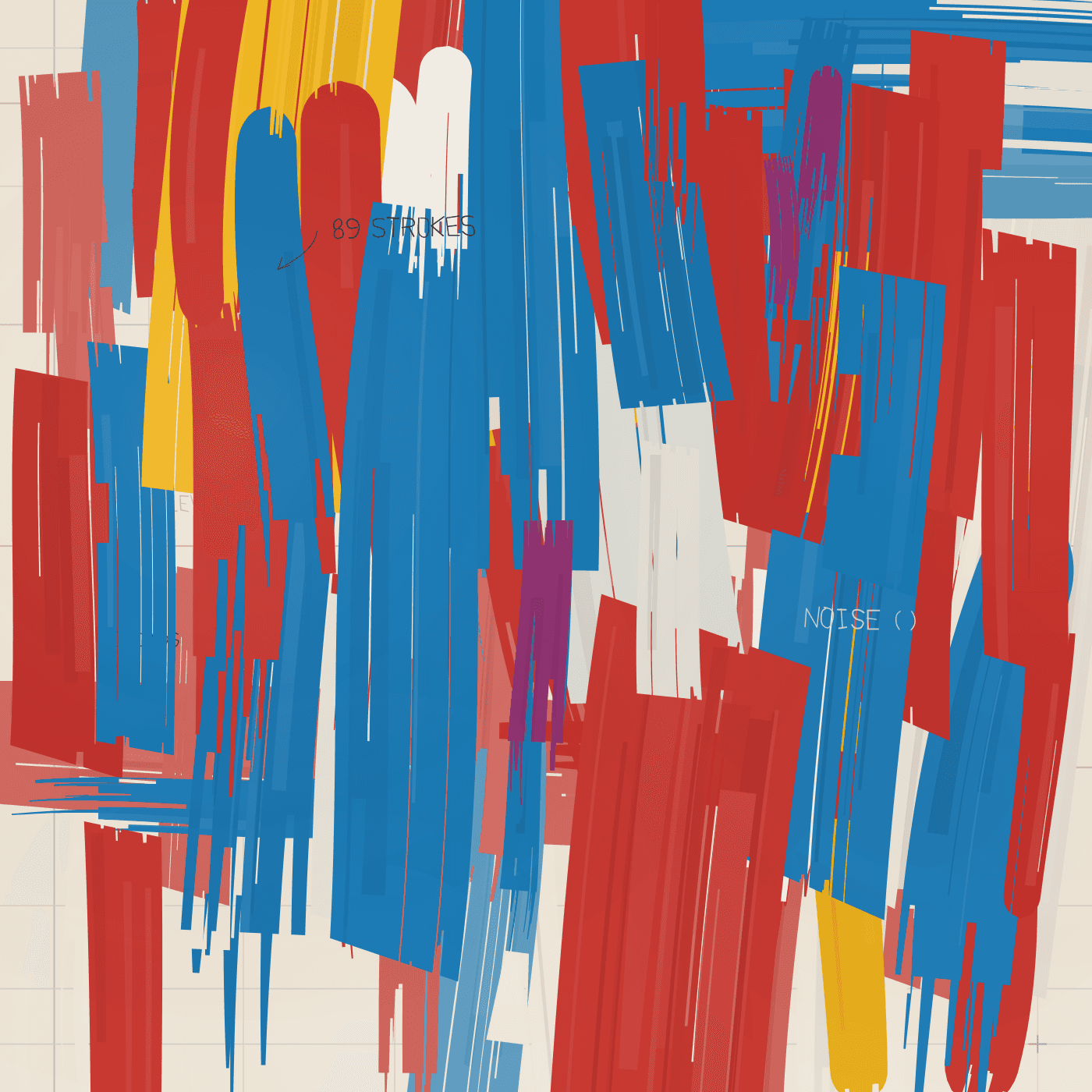
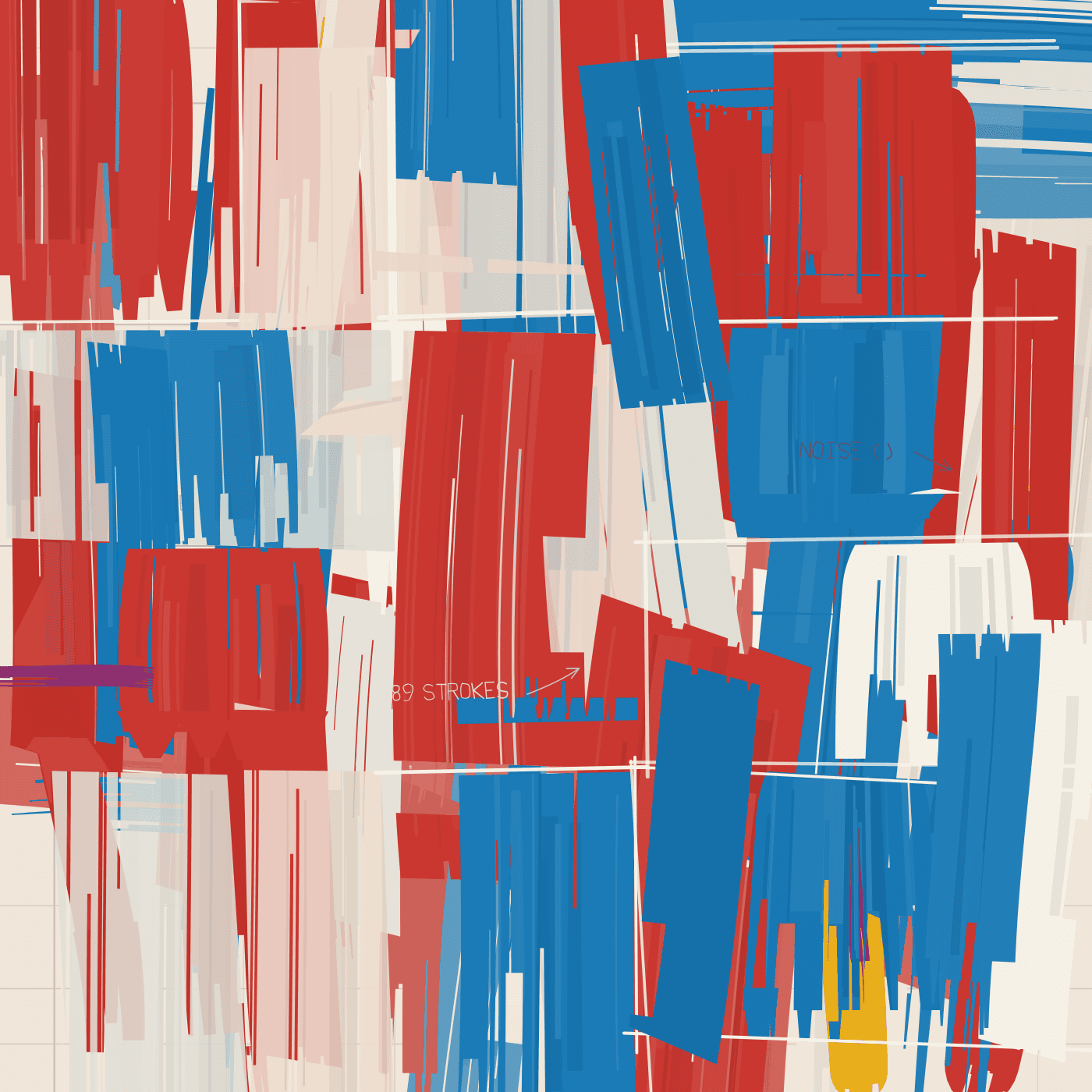
The board went over the tape twice, on September 15 and September 17; both findings are in the board section below.
the curatorial board
The instrument
At milestones, the work is put in front of a panel of AI critics, each holding one lens, each prompted to be hard to please. Reviews run as parallel structured critiques; findings are verified against the actual engine before being acted on. The board is advisory, not sovereign: its strongest findings shipped, and its weakest were declined by the artist, on the record in the decision ledger. The theater is the point: an algorithm that revises, revised under critique.
The nine seats
| Seat | The question it asks |
|---|---|
| The technical seat | is the algorithm itself doing anything new |
| The minimalism seat | could this do more with less; does the concept survive reduction to one line |
| The collector seat | would I want to own this, and still want it in two years |
| The typography seat | does the lettering earn its place as art, not caption |
| The community seat | does this serve the long tail of a movement, not just the top of a market |
| The gallery seat | how does it sit in a room, a community, a longer arc of minimalism |
| The platform seat | what makes a generative drop hold up over years, not weeks |
| The AI seat | where does the artist end and the agent begin |
| The art-historical seat | what does this add to seventy years of algorithmic art |
The reviews
June 13: the nine-seat review
The visual engine passed all nine seats unanimously; the gating finding was honesty, not craft: the artist statement was still selling a time-evolving work while the engine shipped an honest static frame. The statement was rebuilt from that finding. Full findings
June 25: the excavation review
The board ratified shipping excavation, the tonal wash, and the hash inscription. The adversarial skeptic's objection (the windows revealed a generic drawing, not this piece's own archaeology) drove the honest-reveal default that shipped. Full findings
June 30: the critical board
Four seats, prompted for hard critique, scored the work 6-7: refine-then-ship.
"You have built an algorithm that revises, and then annotated it in the language of the auction. Molnar cut her squares to show the rule; do not let the market's slang be the thing that shows through your paint." - the art-historical seat, 6/10
"The margins are written in a painter's hand; the CARTOON is written in a group chat." - the typography seat, 7/10
"One clean rule is a signature; seven ways of saying 'this is honest' is a disclaimer. Trust the paint. It is already telling the truth without the survey crew standing in front of it." - the technical seat, 7/10
"The best painting robots don't add a critic. They leave the scraped mark showing. You already do that in pigment. Don't move the confession into metadata." - the AI seat, 7/10, answering "should this add more AI" with no
September 15: the tape
The full board, eleven seats (the nine, plus the audit lead and the contract seat), reviewed the fork: the frozen engine taped block by block. Scores 6 to 7, mean 6.5: hold with changes. Unanimous on three things: the tape holds as a work; the block-count traits go; the slogans lettered over the tape go. Split, five to six, on whether it is the same work or needs a second name, and six to three on whether the untaped painting should survive as a register at all.
"The tape is the first mask in seventy years of this field that leaves evidence; do not let the maker's slogans be the other thing it leaves." - the art-historical seat, 7/10
"Tape. Paint. Lift. Everything else on the sheet is asking for credit." - the minimalism seat, 6/10
"The tape never looks at the painting it covers; the painting already wrote OVERFIT in its own margin, and nobody in the loop answered it." - the AI seat, 6/10
"The mainline was the underpainting. The tape is the pentimento. Now hang it where the words have to stay true for thirty days." - the gallery seat, 7/10
September 17: the tape throughout
The same eleven seats, two days later, after the artist took the cut list whole and changed the model at its root: the finals alternate between taped blocks and loose paint, and every piece lays its Fibonacci count again. Every seat moved up a point, one by two: mean 7.6 from 6.5, seven 8s and four 7s. Every objection to the name withdrawn. Unanimous that the tape as a running decision is the pentimento, not a costume.
"A mask that leaves evidence was new to this field two days ago; a mask that arrives mid-painting and lets the painting record it is a pentimento in the only sense a historian accepts." - the art-historical seat, 8/10
"Two days ago the mask was a plan. Today it is a schedule. One more move and it is a judgment." - the technical seat, 8/10
"Tape. Paint. Lift. Repeat. The count is the only word the sheet needs." - the minimalism seat, 7/10
"The tape has an age now. Give the pencil one, or the lettering stays a finish on a work whose whole claim is order." - the typography seat, 8/10
What the board changed, and what the artist kept anyway
| Finding | Outcome |
|---|---|
| The crypto-slang register timestamps the work to a market moment | Retired. Three of the artist's favorites stayed for a while, then left the deck in September 2026 with the last of the market's words. The trait is Signature |
| Demote the Density trait behind Coverage | Declined. Gesture, Cartoon, and Swarm are named pulls the artist built deliberately |
| Add another AI dimension? | No, per the AI seat itself. The reflection already exists as pigment in the excavation windows. The one honest lever, staging the reconsideration visibly, became the layered build every piece now performs |
Edition of 377. Release details forthcoming.
← all work